
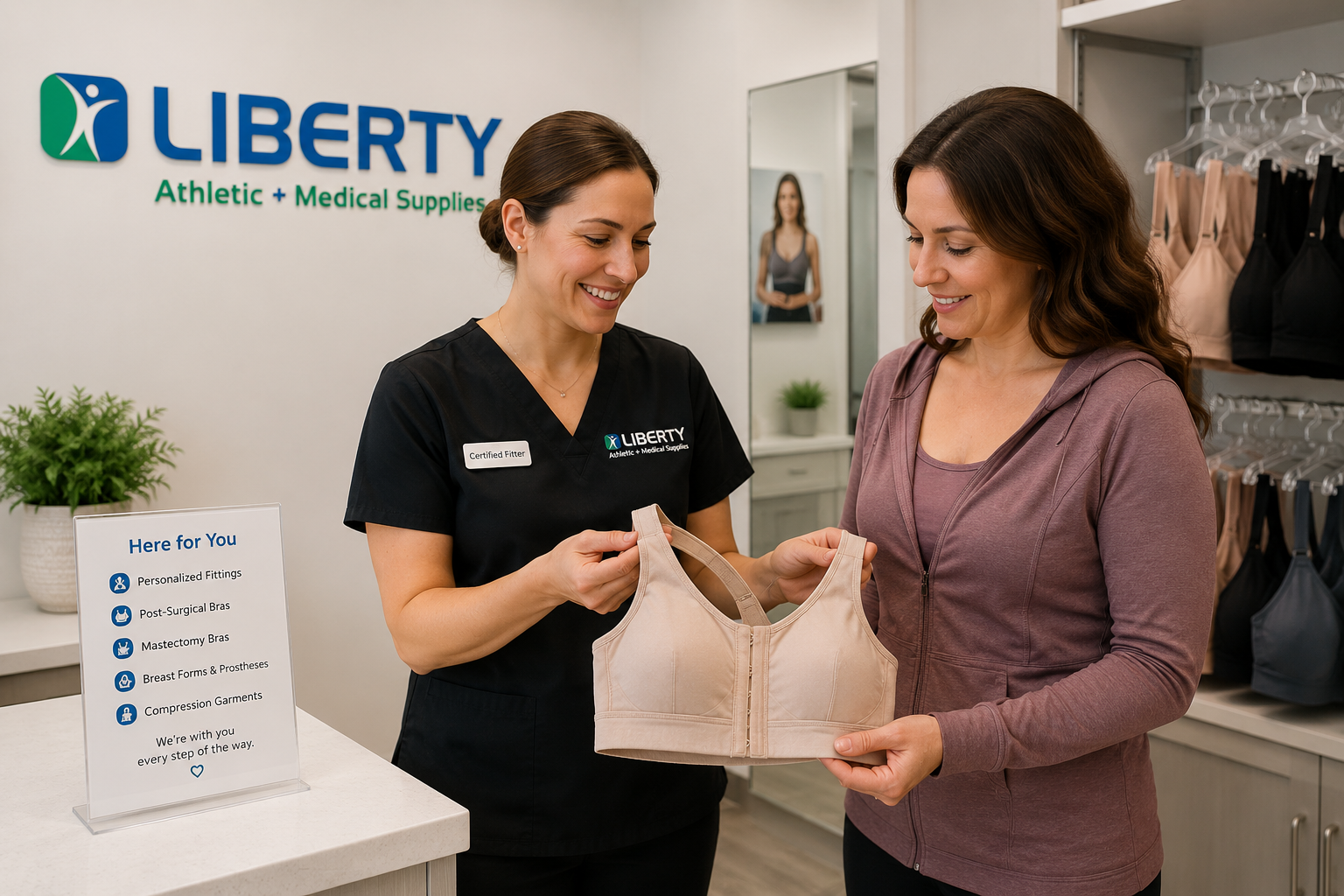
Choosing a bra after breast surgery is different from choosing an everyday bra.
Swelling, tenderness, dressings, surgical drains, incision placement and temporarily reduced shoulder movement can all change what feels comfortable and what your healthcare team recommends.
The best post-surgical bra for you will depend on the procedure you had, your stage of recovery and the instructions provided by your surgeon or treatment team.
Medical disclaimer: This article provides general educational information and does not replace advice from your surgeon, physician, nurse or other qualified healthcare professional. Always follow the instructions provided by your treatment team.
Follow Your Surgeon’s Instructions First
Before buying or wearing a recovery bra, ask your healthcare team:
- Whether you should wear a bra after surgery
- Whether compression is recommended
- How much support or coverage you need
- How many hours per day the garment should be worn
- Whether it can be removed for sleeping or showering
- Whether drains or dressings require a particular style
- Where the lower band should sit
- When you may transition to another type of bra
There is no single postoperative bra schedule that applies to every breast procedure.
Someone recovering from a breast reduction may receive different instructions from someone recovering from a mastectomy, reconstruction, lumpectomy or augmentation.
Why Your Regular Bra May Not Be Suitable Right Away
An everyday bra may include features that are uncomfortable during early recovery, including:
- Underwires
- Rigid seams
- Narrow straps
- Tight elastic
- Back closures
- Pullover construction
You may also find it difficult to reach behind your back or raise your arms comfortably after surgery.
That is why a front-closing bra may be easier for some people during early recovery.
Your usual bra size may also change temporarily because of swelling. For this reason, your normal size should not automatically be used when selecting a postoperative garment.
What Can Affect Your Post-Surgical Bra Choice?
Several factors can influence which bra may be most suitable during recovery.
These include:
Procedure Type
Mastectomy, reconstruction, augmentation, reduction and lumpectomy can involve different recovery needs.
Swelling
Swelling may change during recovery and can temporarily affect your measurements and comfort.
Incision Location
The position of an incision can affect where seams, bands and closures should sit.
Surgical Drains
Some people leave surgery with drains and may require garments or accessories that help manage tubing.
Arm and Shoulder Mobility
Limited movement can make front-closing or adjustable garments easier to put on and remove.
Healthcare Instructions
Your surgeon or treatment team should guide the level of support, coverage and wearing schedule that is appropriate for you.
Features to Look for in a Post-Surgical Bra
Not every patient needs every feature, but the following details are useful to consider.
Front Closure
A front zipper or hook-and-eye closure may be easier to manage when shoulder or arm movement is limited.
Some recovery bras combine hooks and a zipper to make fastening easier.
Adjustable Straps
Adjustable straps can help modify fit and coverage as swelling changes.
They may also make dressing and follow-up examinations easier.
Wire-Free Construction
A wire-free design avoids placing a rigid underwire beneath the breast.
This can be especially important when an incision or tender area is located near the lower breast crease.
However, not every wire-free sports bra is automatically suitable after surgery.
Soft, Comfortable Material
Soft fabric may help reduce friction against sensitive areas.
Breathable or moisture-managing materials may also be more comfortable when a garment must be worn for extended periods.
Thoughtful Seam Placement
Pay attention to where the seams sit.
A soft bra can still be uncomfortable if a seam rests directly on a sensitive incision or healing area.
A Comfortable Lower Band
The lower band should not roll, dig into the skin or sit directly against a sensitive incision.
Some recovery bras use a longer band so that it sits below the natural breast crease.
Whether that design is appropriate depends on your procedure and incision placement.
Adjustable Sizing
Swelling can change during recovery.
Features such as:
- Multiple rows of hooks
- Adjustable straps
- Flexible cups
- Expandable closures
may allow the garment to adapt as your body changes.
Pocketed Cups
Pocketed cups can hold a temporary puff, breast form or prosthesis.
These are particularly common in mastectomy bras.
Not every post-surgical bra includes pockets, so always check the product specifications.
Drain-Management Options
Some patients leave surgery with one or more drains.
Certain recovery garments may include:
- Drain pockets
- Pouches
- Loops
- Openings for tubing
Ask your healthcare team how drains should be supported.
A garment should not pull on drain tubing or place unwanted pressure on the insertion area.
Can I Wear a Regular Sports Bra After Breast Surgery?
Only when your surgeon or treatment team says it is appropriate.
Some sports bras have firm elastic, strong compression, internal seams or pullover construction that may be uncomfortable during early recovery.
A purpose-designed recovery bra may provide easier access and greater adjustability.
However, the words “post-surgical” or “recovery” do not automatically make a garment suitable for every procedure.
Recovery Bra vs Sports Bra
A recovery bra and a sports bra can serve different purposes.
A recovery bra may include:
- Front closure
- Adjustable straps
- Wire-free construction
- Softer seam placement
- Flexible sizing
- Postoperative-specific features
A sports bra may include:
- Pullover construction
- Firm elastic
- Racerback designs
- Stronger activity support
- Less adjustability
- Performance-focused fabric
Neither option is automatically correct for everyone.
The best choice depends on your procedure, recovery stage and healthcare provider’s instructions.
How Tight Should a Post-Surgical Bra Feel?
A post-surgical bra should feel secure at the level recommended by your healthcare team.
It should not cause:
- Sharp or increasing pain
- Difficulty breathing
- New numbness or tingling
- Direct pressure on an incision
- Irritation around a drain site
- Significant rolling or folding
- Swelling collecting above or below the garment
If you experience these problems, contact your healthcare provider.
A garment that is too loose may move or fail to provide the intended support. A garment that is too tight may create unwanted pressure.
Signs of a Comfortable Fit
A properly selected garment may feel:
- Secure without being painfully restrictive
- Smooth against the body
- Comfortable around the straps and lower band
- Stable during gentle movement
- Easy to fasten and adjust
The correct level of support should come from your treatment team.
Why Professional Fitting Can Help
Your postoperative measurements may be different from your normal bra size.
A trained fitter can help assess:
- Band fit
- Cup volume
- Coverage
- Strap positioning
- Closure accessibility
- Seam placement
- Pocketed options
- Temporary breast forms
- Changes in swelling
A professional fitter does not replace your surgeon.
Their role is to help translate your healthcare provider’s instructions into a practical garment choice.
What Happens During a Professional Fitting?
Depending on your needs, a fitter may:
- Review your current measurements
- Compare front-closing and adjustable styles
- Check where the lower band sits
- Review cup coverage
- Assess strap placement
- Discuss pocketed options
- Consider changes in swelling or sensitivity
- Help compare temporary or permanent breast forms
The fitting should be private, respectful and focused on comfort and practical garment selection.
Post-Surgical Bra Fittings in Winnipeg
Liberty Med offers private breast-care fitting support in Winnipeg.
Our team can help you compare:
- Front-closing recovery bras
- Adjustable postoperative garments
- Wire-free options
- Pocketed mastectomy bras
- Temporary breast forms
- Permanent breast prostheses
- Relevant compression garments
Professional fitting can be especially useful when your measurements have changed or when you are unsure which garment features best match your healthcare provider’s instructions.
Need Help Choosing a Post-Surgical Bra?
Book a private fitting with Liberty Med in Winnipeg.
Our team can help you compare closures, coverage, sizing and pocketed options based on the instructions provided by your healthcare professional.
Frequently Asked Questions:
What bra should I wear after breast surgery?
Wear the type recommended by your surgeon or treatment team. The correct option depends on your procedure, incision placement, swelling and required support.
Is a front-closing bra better after surgery?
A front closure may be easier when arm or shoulder movement is limited, but it is not automatically the correct option for every procedure.
Can I wear a sports bra after breast surgery?
Only when your healthcare provider says it is suitable.
Should I order my usual bra size?
Not necessarily. Swelling and surgical changes may temporarily affect your measurements.
How tight should a post-surgical bra feel?
It should feel secure at the level recommended by your healthcare provider without causing sharp pain, breathing difficulty, new numbness or unwanted pressure on an incision.
Where can I get a post-surgical bra fitting in Winnipeg?
Liberty Med provides private breast-care and post-surgical garment fitting support in Winnipeg.
Compression Socks for Travel: What Winnipeg Flyers Should Know Before a Long Trip
Post-Surgical and Mastectomy Bra Fittings in Winnipeg: What to Expect